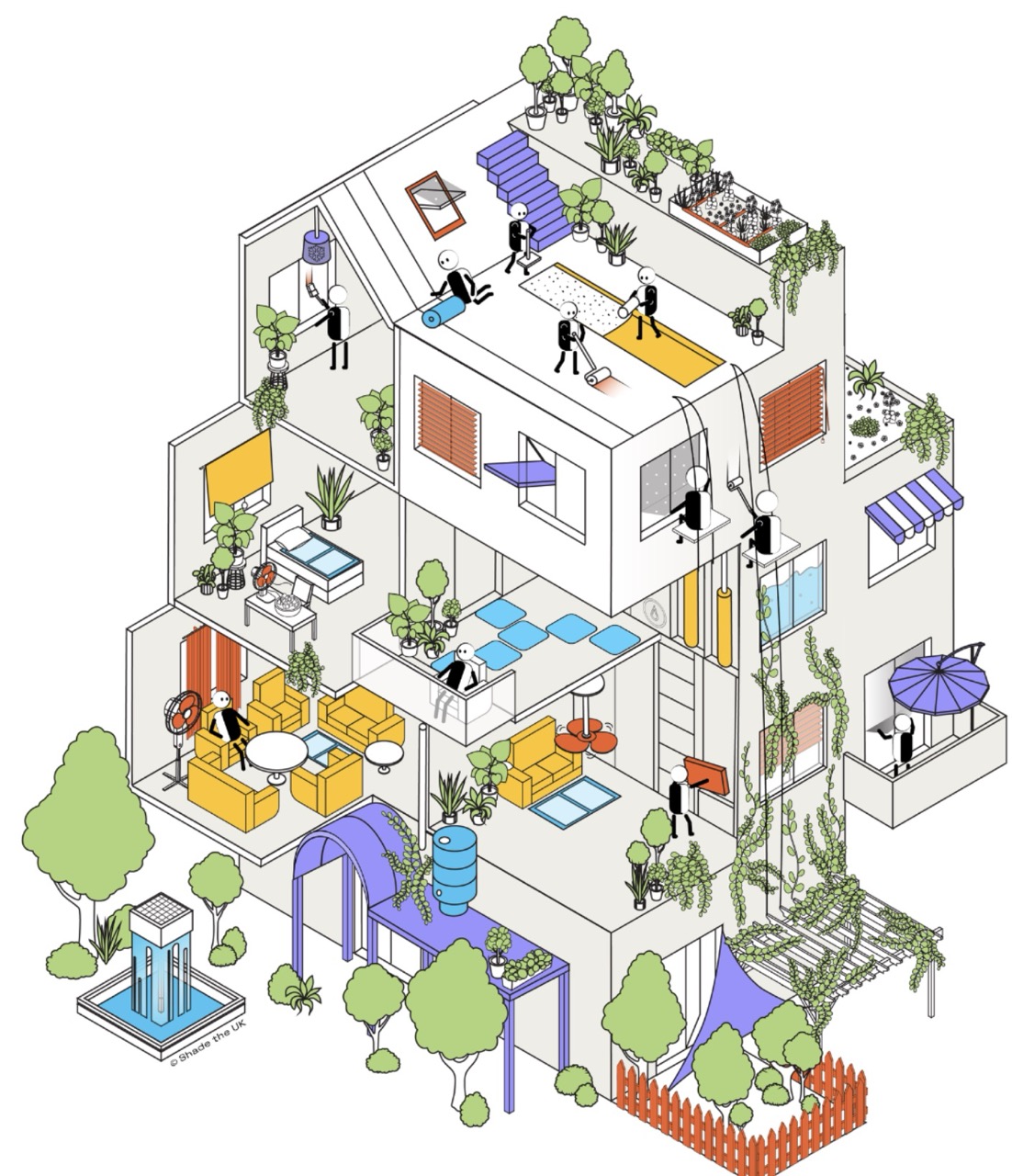
Cooling Roadmap for London
Summary
As London experiences hotter summers and more frequent heatwaves as a result of climate change and the urban heat island effect, demand for cooling is expected to rise significantly.
The first of its kind in the UK, the Cooling Roadmap for London (CRL) sets out a long-term framework for sustainable, efficient and equitable cooling across the capital. It explores what rising temperatures could mean for London's buildings, communities, infrastructure and energy systems over the next 25 years and beyond, and the actions needed to keep the city cool, healthy and safe for all Londoners.
The CRL was commissioned by C40 Cities, supported by the Greater London Authority, funded by Carrier, and delivered by Love Design Studio with Shade the UK. It strengthens the evidence base for the Mayor of London's Heat Ready London plan, published in August 2026.


Our approach
Extreme heat affects everyone, but not equally. Older people, young children, people living with existing health conditions and lower-income households are some of the groups of people at greatest risk. To help address this, the CRL focused on buildings and spaces within three sectors that support and are home to some of London's most vulnerable people: social housing, social care and healthcare.
Our approach combined stakeholder engagement with data-led analysis to understand how heat is already affecting London's most vulnerable communities and how this will change as the UK continues to get hotter. Building on our experience of working directly with heat vulnerable communities across London to better understand people's lived experiences, we undertook strategic engagement with people and organisations across the focus sectors to explore how extreme heat affects everyday life. These perspectives helped shape the roadmap's recommendations, ensuring they respond to the needs of the people most at risk while supporting greater resilience to heat across the capital.
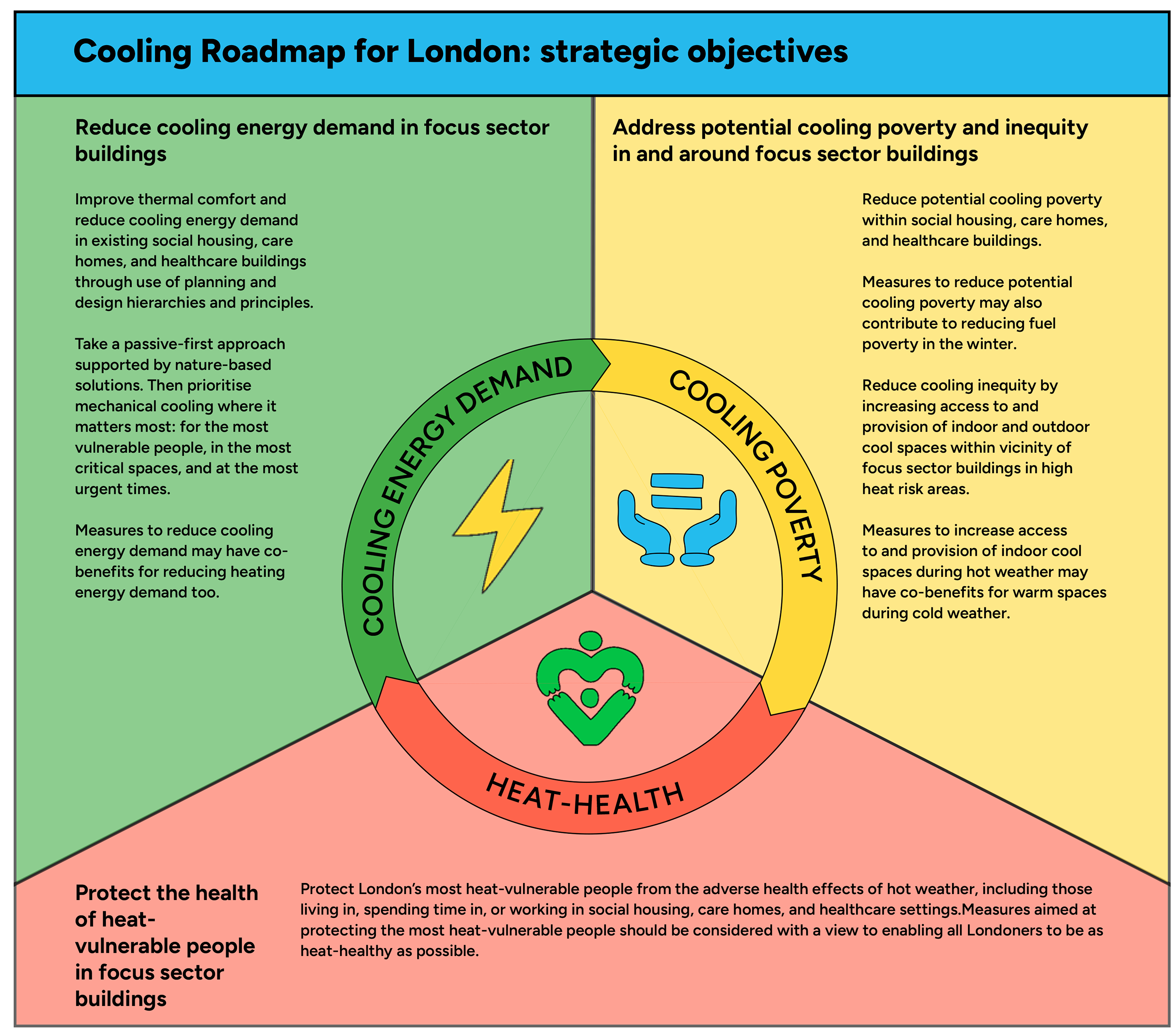
Outcomes from the study
The CRL has established one of the first city-wide evidence bases for understanding current and future cooling energy demand in London.
Our analysis found that the energy required to cool homes, workplaces and public spaces could more than double by 2050 if rising temperatures are met primarily through increased use of active cooling such as air conditioning.
In response, the CRL identifies 19 priority actions across four themes:
- Policy and Governance
- Buildings and Technology
- Community and Culture
- Landscape and Public Realm
Together, these actions provide a practical pathway over the next 25 years to reduce cooling energy demand, address potential cooling poverty and inequality, and better protect the people most vulnerable to rising temperatures.
The CRL now forms part of the evidence base for the Mayor of London's Heat Ready London plan and supports the city’s wider climate resilience and adaptation ambitions.
-1.jpg)
-2.jpg)
Image pictured in summary copyright Francesco Russo