Pre-empting the air conditioning culture war
Written by:
Andy Love
%20Large.jpeg)

As we start the new year, temperatures have dropped, coats are zipped up tight and snow has fallen across the country. Most of us are thinking about staying warm, perhaps wondering whether to upgrade our heating systems or improve insulation.
Shade the UK’s position on cooling, comfort, and climate resilience
As we start the new year, temperatures have dropped, coats are zipped up tight and snow has fallen across the country. Most of us are thinking about staying warm, perhaps wondering whether to upgrade our heating systems or improve insulation.
Yet despite the cold, for many it’s still impossible to forget the impact of the last few years’ extreme heat: days of 30°C-plus temperatures, stifling buses, tubes and trains, homes that became dangerously hot, nurseries too warm to play in, schools too hot to learn in, and offices where working comfortably was impossible. Add to that the memory of July 2022, when the UK passed 40°C for the first time, and it is clear that, however cold it feels today, our country remains deeply unprepared for rising heat.
As a result, a quiet culture war is now brewing in Britain, and it’s about air conditioning.
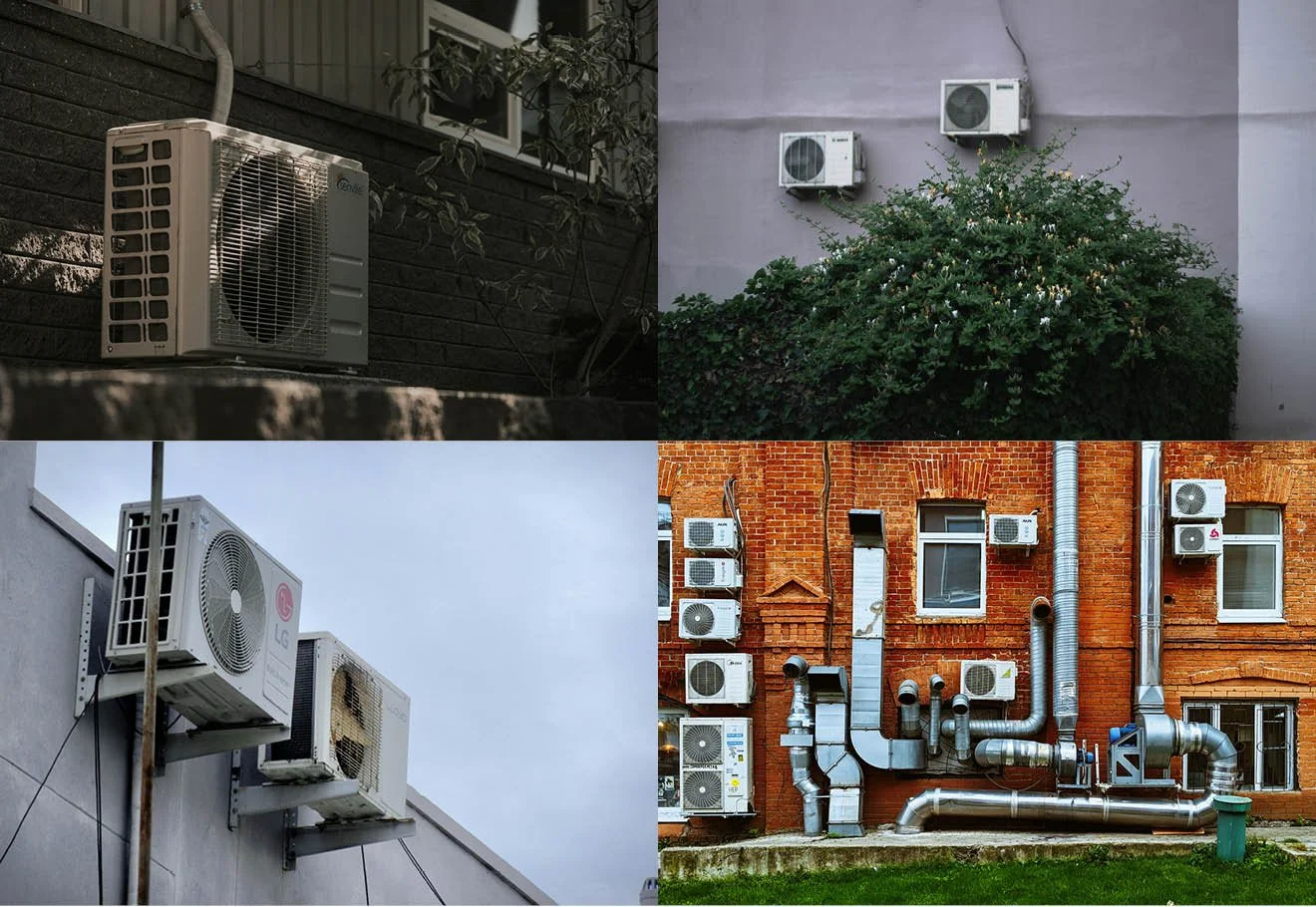
As heatwaves in the UK become more frequent, hotter, longer, and deadlier, the question of how we keep cool is rapidly shifting from personal preference and consumer choice to a political battleground and ethical dilemma. Yet this isn’t a debate neatly divided along left and right, or private versus public interest. Calls for more widespread air conditioning can just as easily align with left of centre views for protecting human rights to greener ambitions made possible by renewable energy as with nationalist or pro-growth arguments for comfort and productivity, while resistance to it can come from conservative instincts to preserve heritage and avoid “ugly” air-conditioning units cluttering historic streets. For environmentalists, the desire to curb carbon emissions and reduce reliance on active cooling may sometimes conflict with the urgent need to protect vulnerable lives. As ever, it isn’t black and white, the debate sits at the intersection of thermal comfort, health, safety, identity, and the kind of future we want to create.
At Shade the UK, our mission is simple: zero deaths from overheating in the UK, whilst protecting the health of vulnerable people. Yet how we achieve this is more complex. We believe it’s possible to protect lives, enhance health and build resilience, without repeating or amplifying the mistakes of the high-energy, high-inequality model of cooling. However, we recognise that a culture war around air conditioning is already emerging.
Avoiding false choices
Recent headlines warn of a “sweltering Britain” facing a “creaking power grid” (The Telegraph). Others highlight the social divide between those who can afford cooling and those left behind (Bloomberg).
Commentators warn of Britain “becoming addicted to air conditioning” (The Conversation), and of how “air conditioning is destroying the planet” (The Guardian). Meanwhile, BBC features capture the frustration of residents sweltering in unfit housing stock (BBC News; BBC News).
This polarisation, between environmental purists and technological evangelists, risks paralysing pragmatic progress. We want to pre-empt and bridge that divide.
The missing piece: we don’t yet know where the real overheating risks are
One of the biggest challenges we face is that, unlike energy performance, overheating risk in UK buildings is poorly recorded, poorly understood, and rarely monitored in any systematic way. With energy, tools like EPCs and billing data already tell us which buildings are inefficient and where investment is needed. With heat, there is no equivalent national picture. We simply do not measure internal temperatures at scale, and we rarely track where people are most at risk.
This lack of evidence leaves us in danger of applying the wrong solutions to the wrong buildings. Without good data, there is a real risk that we respond to fear and headlines rather than need; installing large, expensive, energy-hungry cooling systems where simple, affordable interventions such as external shutters, better ventilation strategies, solar control glazing, tree planting, or smarter window-opening regimes would have kept spaces safe and comfortable.
Shade the UK believes that before we default to an ‘air conditioning nation’, we need to understand which homes, schools, workplaces and community spaces are genuinely at risk, and what least-energy, lowest-cost solutions can protect people first. That is why we are advocating for large-scale understanding of heat resilience across the UK’s building stock, supported by monitoring, better data, improved planning and conservation laws, and practical, human-centred guidance.
Our research with the London School of Economics and the Grantham Institute on Building Heat Resilient Neighbourhoods has already shown how evidence, planning reform, and community engagement can work together to protect people, without locking the UK into a future of escalating energy demand and inequality. This kind of evidence-led adaptation must become the norm, not the exception.
Two futures
UK society stands at a crossroads.
In one possible future, we adapt to rising heat through mechanical and electrical means; widespread installation of air conditioning, enabled by falling costs; increased electricity generation; relaxed planning rules, and cultural acceptance of ‘active cooling’ as standard. Comfort becomes a commodity; safety depends on access to a ready supply of energy. Waste heat from these active cooling systems and products only adds to the problem.
In the other, we adapt by working with the climate, not against it; reshaping our buildings, cities, and daily lives to stay cool through shade, ventilation, vegetation, reflective surfaces, and collective care. It is a slower, and arguably harder path, demanding design reform, investment, and imagination, but one that builds resilience and buy-in from the ground up, not plugged in at the wall.
Our position
Shade the UK believes the solution lies between these poles.
Air conditioning can and will save lives, particularly the lives of people who are most vulnerable to heat e.g. the elderly, the unwell, and the isolated. It can also make it safer for healthy children and adults to play, learn and work during hot weather. But relying on it as our first or only line of defence will reduce resilience, limit our options, deepen inequality, strain our electricity grid, and trap us in a feedback loop. The hotter it gets, the more we cool; the more we cool with active systems and products, the hotter it gets.
Our focus is on untangling why so many people and buildings have no other choice. The reasons are structural, not personal. From outdated planning policies that restrict shading and ventilation, to historically less green and leafy neighbourhoods, to procurement systems that reward short-term cost savings over long-term value and resilience.
We advocate for a balanced, evidence-based approach to cooling:
- Invest in better data, monitoring, and assessment so people, building owners, and local authorities can understand which buildings and communities are genuinely at risk from overheating, and what proportionate measures are needed.
- Develop an EPC-style heat resilience rating for homes and buildings at the point of sale or lease.
- Create borough-level heat risk maps, combining satellite data with real-world indoor temperature monitoring.
- Pair mapping with community engagement workshops, recognising that heat is hyper-local and lived experience is critical.
- Support targeted monitoring in priority buildings such as schools, care homes, hospitals and social housing.
- Launch a national heat risk awareness campaign, helping people understand vulnerability and take practical action.
- Prioritise passive and preventative cooling wherever possible, through design, greening, and behavioural adaptation.
- Use active cooling responsibly and equitably, targeted to protect health and save lives when passive measures aren’t enough or are unable to be installed
- Reform the systems and policies to make low-energy, climate adaptive design the easier not harder choice
A future worth choosing
Britain’s response to the cooling challenge we face should be about facts, foresight and fairness - reflecting the kind of society we want to become.
Do we want a future where thermal comfort and safety depends on income and power supply, or do we want to create one where everyone has the right to a cool, healthy home and neighbourhood?
Our stance is: Shade the UK will continue to work with partners across the public health, housing, planning and design sectors to ensure that the UK stays cool, effectively, affordably, and equitably. Because preventing overheating related deaths and staying healthy in the heat should never come at the cost of worsening the crisis we are trying to solve.